
Estimated reading time: 5 minutes
A home sauna is no longer a luxury reserved for spas and gyms. Across the UK, more homeowners are adding saunas to gardens, garages and spare rooms for daily relaxation, recovery and a genuine slice of Nordic living at home. The home sauna UK market has grown fast in recent years, with more choice than ever in styles, heaters and price points. This guide covers everything you need to know before buying one: the types available, realistic costs, planning rules and how to choose between a kit and a bespoke build.
What is a home sauna?
A home sauna is a purpose-built, heat-insulated room installed at your property, either indoors or in the garden, heated to around 70–100°C by an electric or wood-fired stove. Unlike gym saunas, a home sauna is designed around your space, your schedule and your privacy, and can be used daily without a membership.
Types of home sauna in the UK
Most UK home saunas fall into three groups, and the right choice usually comes down to the space you have available.
Outdoor and garden saunas
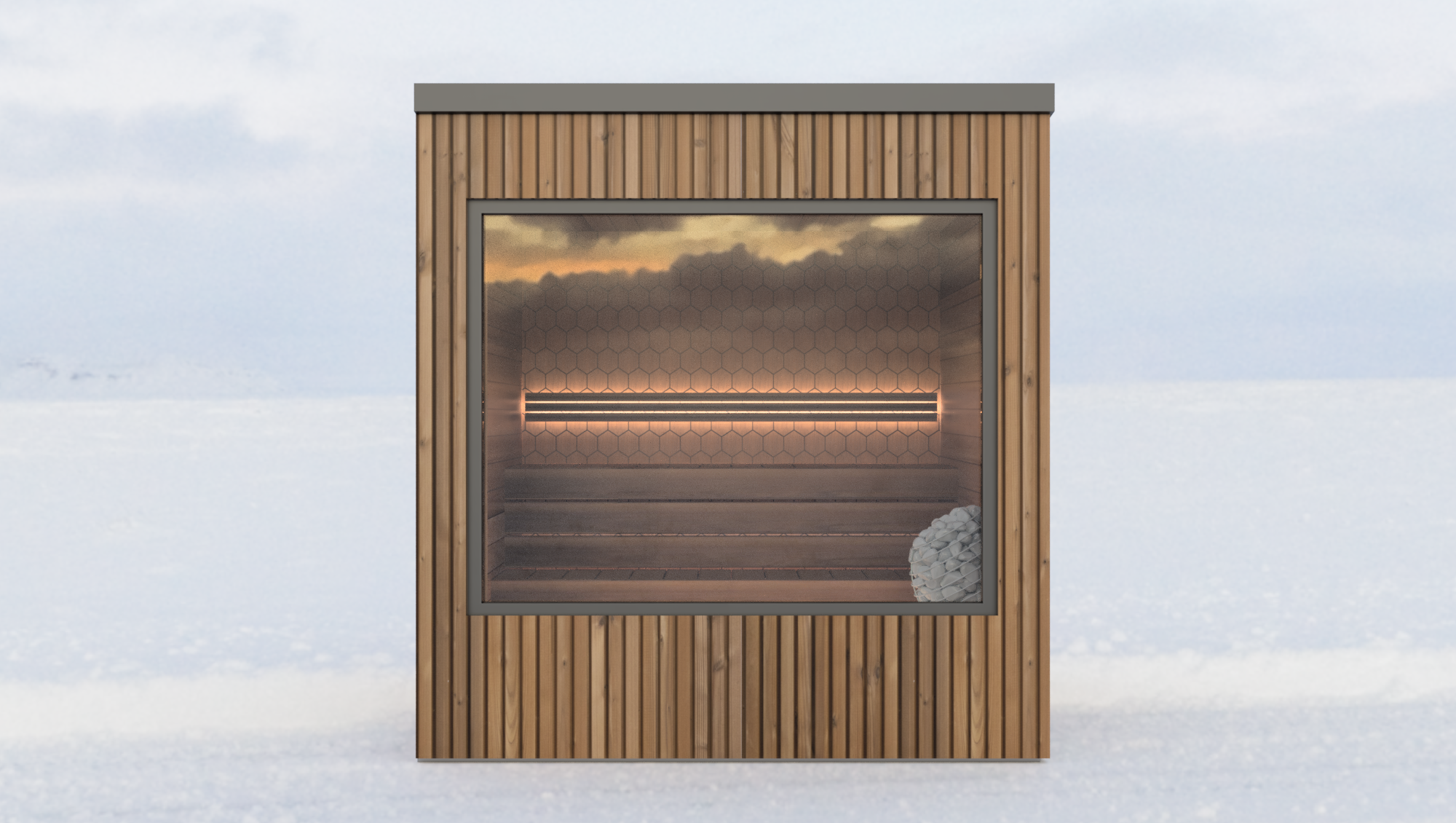
The most popular choice in the UK. A standalone garden sauna gives you a dedicated wellness space without sacrificing any room indoors, and larger designs can include panoramic windows, changing areas, full-height glass doors, LED lighting and log-burning stoves. See real examples in our sauna portfolio.
Indoor saunas
Built into a bathroom, garage, basement or spare room, an indoor sauna is the most convenient option for year-round use. There is no walk across a cold garden in January, and compact designs fit spaces as small as a large wardrobe, making them ideal for urban homes.
Mobile and barrel saunas
Mobile saunas are built on a trailer or skids, so they can move with you or be positioned seasonally. Our Meri mobile sauna is a good example of how far these designs have come from the traditional barrel.
How much does a home sauna cost in the UK?
Costs vary widely with size, materials and heater type. Small flat-pack kits start in the low thousands, while a fully bespoke, architect-quality build is typically a five-figure investment. Our custom builds start from around £35,900. As a rule of thumb, the more the sauna is designed around your specific space and how you will actually use it, the more value it holds over time. We cover budgeting in detail in our bespoke saunas service overview, and a dedicated cost guide is coming to this blog soon.
Do you need planning permission for a garden sauna?
In most cases, no. A garden sauna usually falls under permitted development in England and Scotland, provided it is single-storey, sits below the height limits (typically 2.5m near a boundary) and covers less than half the garden. Listed buildings and conservation areas are the main exceptions, so always check with your local authority before building. A reputable builder will flag this during the design stage.
What are the benefits of a home sauna?
Regular sauna use is one of the best-studied wellness habits in the Nordic countries, where it has been part of daily life for centuries. Regular sauna sessions are associated with better sleep, muscle recovery and lower stress; users most commonly report better sleep, muscle recovery after exercise, and a reliable way to switch off at the end of the day. Having a sauna at home is what turns an occasional treat into a genuine daily routine, and that consistency is where the real benefit lies.
Kit sauna or bespoke build?
A kit sauna is cheaper upfront and quick to install, but you accept its fixed dimensions, standard materials and generic look. A bespoke sauna is designed around your space, your household and your budget, covering everything from timber selection to heater, glazing and lighting. If the sauna needs to fit an awkward space, complement your home’s architecture, or simply last decades rather than years, bespoke is usually the better investment. Our bespoke sauna service covers design, build and installation across the UK.
Traditional Finnish sauna or infrared sauna?
A traditional Finnish sauna heats the air with a stove and stones, typically to 70–100°C, and lets you control humidity by ladling water over the rocks. It is the authentic sauna experience most people picture, with the crackle of a wood-fired stove or the convenience of a modern electric heater.
An infrared sauna works differently: infrared panels warm your body directly at lower air temperatures, around 45–60°C. Sessions feel gentler, units are cheaper to run and easier to fit indoors, but you lose the steam, the heat ritual and much of the social character of traditional saunas.
Our view: for a garden or purpose-built home sauna, a traditional Finnish design is usually the better long-term investment, both for the experience and for property value. Infrared suits tight indoor spaces and people who find high heat uncomfortable. If you are unsure, try both at our showroom before deciding.
Home sauna FAQs
An electric sauna heater typically draws 6–9kW. Heat-up takes 30–45 minutes, so a one-hour session usually costs a few pounds at current UK electricity prices. Wood-fired stoves avoid electricity costs entirely.
A prefabricated garden sauna can be installed in days once groundwork is complete. Bespoke builds vary with complexity, and your builder should give you a fixed timeline at the design stage.
A well-built sauna is increasingly seen as a desirable wellness feature, particularly on premium properties. Like any garden building, quality of construction is what determines whether it reads as an asset.
Very little: airing after use, occasional cleaning of benches with mild soap, and periodic checks of the stove and stones. A quality timber build will age gracefully for decades.
Ready to explore a sauna for your home?
The best way to understand what a quality sauna feels like is to sit in one. Visit our Glasgow showroom, browse the portfolio, or tell us about your space and we’ll advise on what’s possible, from compact indoor builds to full garden sauna houses.