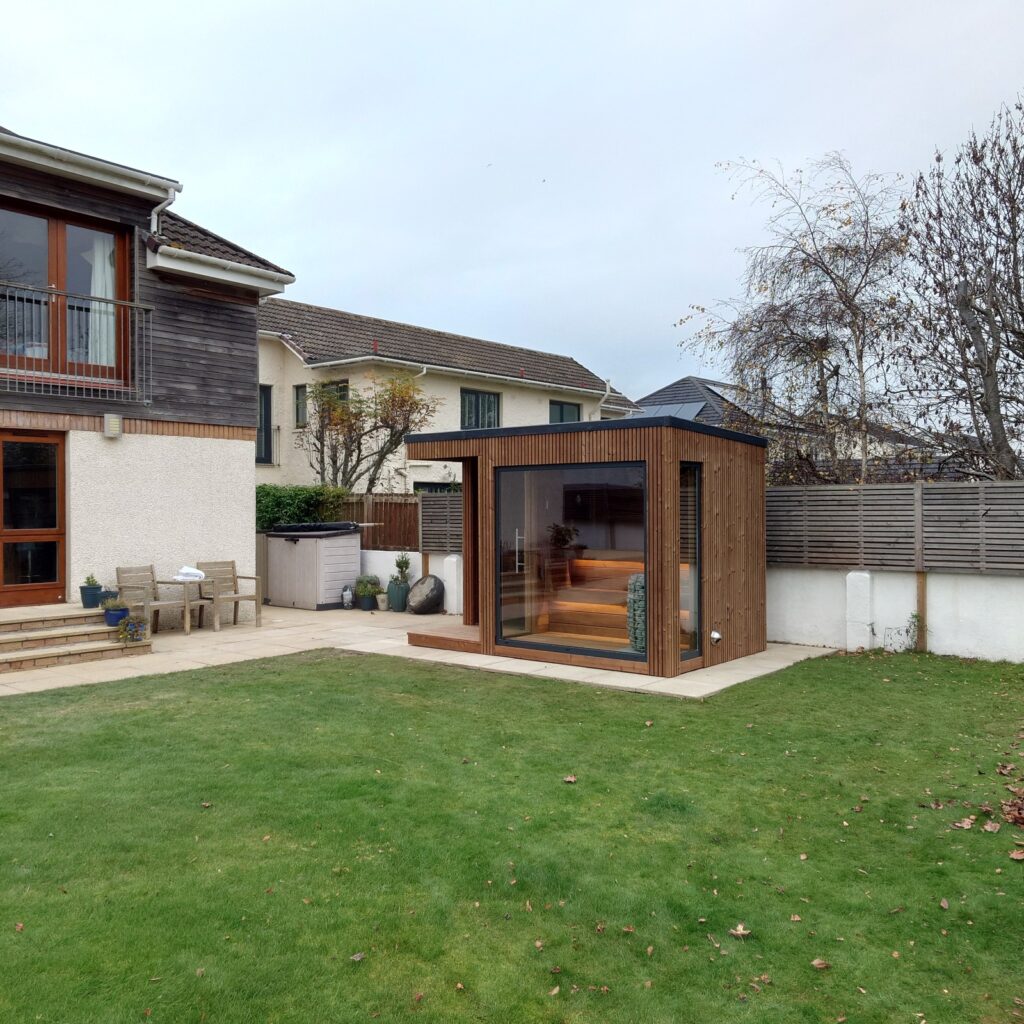
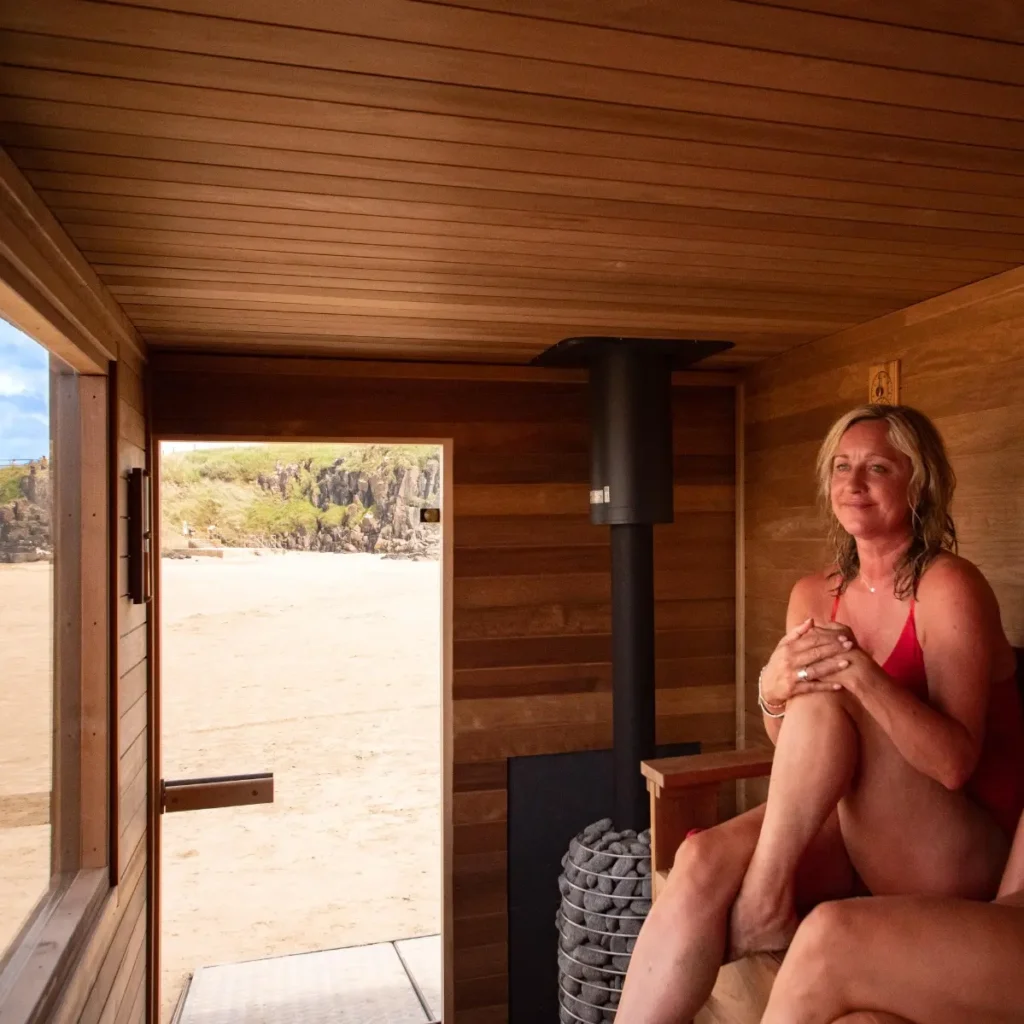
A garden sauna is the most popular way to bring authentic sauna culture home in the UK. A standalone cabin at the bottom of the garden gives you a dedicated wellness space without sacrificing a room indoors, and modern designs are a world away from the basic barrel sauna, think panoramic glass, changing areas, LED lighting and a wood-fired stove crackling on a winter evening. This guide covers everything you need to know about garden saunas in the UK: the types available, how to choose the right one, siting and planning, heaters, realistic costs and maintenance.
What is a garden sauna?
A garden sauna is a purpose-built, heat-insulated cabin installed outdoors in your garden, heated to around 70-100°C by an electric or wood-fired stove. Unlike an indoor sauna built into a spare room, a garden sauna is a standalone structure, effectively a small, beautifully finished outbuilding designed entirely around the sauna experience. It gives you privacy, a proper sense of occasion, and the ability to step straight out into cool garden air between rounds, which for many people is the whole point.
Garden saunas have become the default choice for UK homeowners because they add a wellness space without eating into the house, and because a well-designed cabin becomes a genuine feature of the garden rather than a shed you hide away.

Types of garden sauna
Garden saunas come in several forms, and the right one depends on your budget, your garden and how much you value a bespoke finish.
Barrel saunas
The classic entry point. A barrel sauna’s rounded shape heats up quickly and efficiently, and the compact footprint suits smaller gardens. They are affordable and characterful, though the curved walls limit interior layout and bench space.
Cabin and cube saunas
Traditional square or rectangular cabins offer the most usable interior space and the most flexibility for benches, changing areas and glazing. A cabin sauna can be as simple or as luxurious as you like, and larger designs can include a covered porch, a separate changing room and full-height glass doors overlooking the garden.
Panoramic and glass-fronted saunas
For gardens with a view, a glass-fronted sauna turns the session into an event, watching rain, snow or a sunset from inside a warm cabin. These are increasingly popular in the UK and are usually part of a bespoke or premium build.
Bespoke garden sauna houses
At the top end, a bespoke sauna is designed around your exact space, household and taste, covering everything from timber selection to heater, glazing and lighting. If you want the cabin to complement your home’s architecture, fit an awkward plot or last for decades, a bespoke build is the better investment. You can see real examples in our sauna portfolio.
How to choose the right garden sauna
A few practical questions will narrow the field quickly:
- How many people? A two-person sauna is compact and efficient; a family or entertainer will want a four to six-person cabin with room to lie down. Size drives everything from footprint to heater power.
- Electric or wood-fired? This is the biggest decision after size, more on it below.
- Kit or bespoke? A kit sauna is cheaper and quick to install but comes with fixed dimensions and standard materials. A bespoke build is designed around your space and finished to a higher standard.
- What finish and features? Glazing, changing areas, lighting, benches and external cladding all shape both the experience and the price.
- How long do you want it to last? Quality timber and construction are what determine whether a garden sauna ages gracefully for decades or starts to look tired within a few years.
If you are still weighing up an outdoor cabin against an indoor installation, our complete home sauna guide compares the two in detail.
Where to put a sauna in your garden
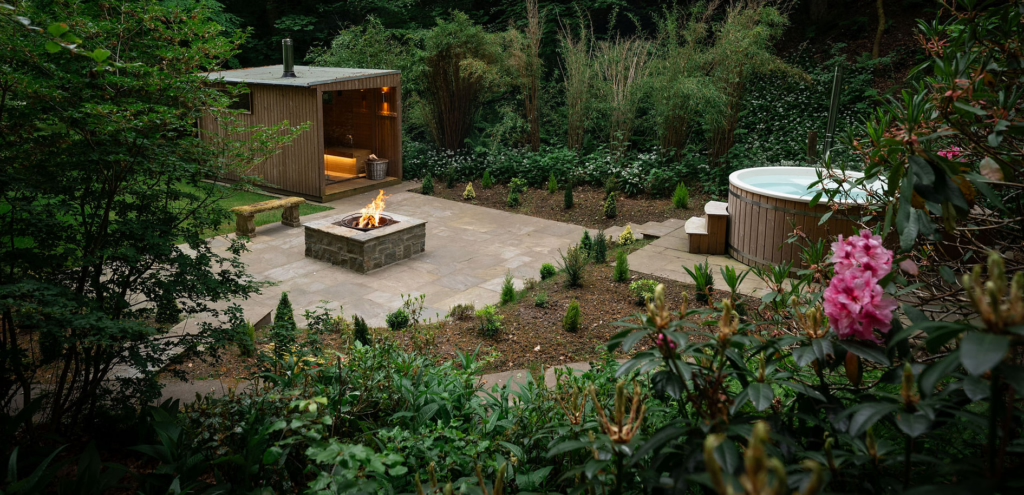
Siting matters more than people expect. A well-placed sauna is a pleasure to use year-round; a badly placed one gets used for a month and then forgotten. Consider:
- Distance from the house: Close enough for a comfortable walk in a towel on a cold night, but far enough for privacy. A covered path or nearby door helps in winter.
- Level ground and a solid base: Saunas need a firm, level foundation, a concrete pad, paving slabs or a purpose-built deck. Groundwork should be sorted before the cabin arrives.
- Privacy and outlook: Position the cabin (and any glazing) to face a pleasant view rather than the neighbours’ windows.
- Access for services: An electric sauna needs a suitable power supply; a wood-fired sauna needs safe clearance from fences and overhanging branches for the flue.
- Boundaries: Keep the height and position within permitted-development limits (see below) to avoid planning complications.
Do you need planning permission for a garden sauna?
In most cases, no. A garden sauna usually falls under permitted development in England and Scotland, provided it is single-storey, sits below the height limits, typically 2.5m where it is within two metres of a boundary, and covers less than half the total area of your garden. There are important exceptions: listed buildings, conservation areas, and some flats and maisonettes have tighter rules, and a wood-fired stove near a boundary needs sensible clearances.
The golden rule is to check with your local planning authority before you build, especially for a larger or wood-fired cabin. A reputable sauna builder will flag any planning considerations during the design stage, so you are not left to work it out alone.
Garden sauna heaters: electric vs wood-fired
The heater defines the character of your sauna, so it is worth understanding the trade-off.
Electric heaters
An electric sauna heater is the convenient choice: flick a switch (or use an app or timer), wait 30-45 minutes, and your sauna is ready. Electric heaters typically draw 6-9kW, need an appropriate power supply, and give precise temperature control. They suit people who want to use the sauna spontaneously and often, and they are the easier option for compact urban gardens.
Wood-fired stoves
A wood-fired stove delivers the authentic experience, the crackle of the fire, the deep enveloping heat, and no electricity costs at all. The trade-off is a little more effort: you need to lay and light the fire, allow longer to heat up, and store dry logs. For many sauna purists, that ritual is part of the pleasure, and a wood-burning garden sauna feels a step closer to a lakeside cabin in Finland.
Both can produce steam, the löyly, when you ladle water over the hot stones. If you can’t decide, it is worth trying both before you buy.

How much does a garden sauna cost in the UK?
Garden sauna prices vary widely with size, materials, heater and finish. As a broad guide for 2026:
- Barrel and small kit saunas: Entry-level flat-pack cabins start in the low thousands.
- Mid-range cabin saunas: Larger kits with better timber, glazing and heaters sit in the mid-to-high thousands.
- Bespoke and premium builds: A fully bespoke, architect-quality garden sauna is typically a five-figure investment. Our custom builds start from around £35,900.
As a rule of thumb, the more the sauna is designed around your specific space and how you will actually use it, the more value it holds over time, both in enjoyment and as a desirable feature should you ever sell. Running costs depend on your heater: an electric session costs a few pounds at current UK prices, while a wood-fired stove avoids electricity costs entirely. For a full breakdown across every sauna type, see our dedicated sauna cost guide, and our outdoor sauna range shows what is possible at different budgets.
Looking after a garden sauna
Garden saunas need surprisingly little maintenance. Air the cabin after each use, wipe the benches occasionally with mild soap, and check the stove and stones periodically. Externally, quality timber will weather gracefully; some owners choose to treat the outside cladding to keep a particular finish. A well-built cabin, properly sited on a solid base, will age beautifully and give you decades of use.
What timber is best for a garden sauna?
Timber is the heart of a sauna, it shapes how the cabin looks, how it feels to sit in and how long it lasts. The best sauna woods share a few qualities: they stay comfortable to touch at high temperatures, resist warping and moisture, and age gracefully rather than splitting or discolouring. Softwoods such as spruce and pine are common and cost-effective, giving that classic pale Nordic look, while denser and more stable timbers are often chosen for benches and premium builds because they handle heat and humidity so well.
For a garden sauna, the external cladding matters as much as the interior. It has to stand up to British weather year-round, so quality and proper detailing are what keep the cabin looking good for decades rather than seasons. In a bespoke build you can choose the timber to complement your home and garden, which is part of why a made-to-measure cabin holds its value so well.
Cooling off: the other half of the ritual
A garden sauna isn’t only about the heat, the cool-down between rounds is central to the whole experience, and it is something a garden setting does better than any indoor cabin. Stepping out into cold air, rinsing under a cold shower, or simply sitting on a covered porch to let your body settle is what makes the next round feel so good. Many owners design in a cooling area from the start: a nearby cold shower, a covered deck, or space for a plunge tub. It is worth thinking about this early, because a good cool-down spot turns a sauna into a proper wellness ritual rather than just a hot room.
Garden sauna vs hot tub
Garden saunas and hot tubs are often considered together, and they suit different priorities. A hot tub is sociable and easy to jump into, but it uses water that must be heated, treated and maintained continuously, which means ongoing running costs and upkeep. A sauna heats only when you use it, needs very little maintenance, and offers the deeper heat-and-recovery benefits that come with traditional sauna bathing. For many UK homeowners focused on wellness, sleep and recovery, and on lower long-term running costs, a garden sauna is the more rewarding investment.
Garden sauna FAQs
How long does it take to install a garden sauna?
Once the groundwork is complete, a prefabricated garden sauna can often be installed in a matter of days. Bespoke builds vary with complexity, and your builder should give you a fixed timeline at the design stage.
Can you use a garden sauna in winter?
Absolutely, winter is when many people enjoy a sauna most. The contrast between the hot cabin and cold garden air is exactly the experience Nordic saunas are built around. Good insulation and a properly sized heater keep the cabin warm whatever the weather.
Do garden saunas add value to a property?
A well-built sauna is increasingly seen as a desirable wellness feature, particularly on premium properties. As with any garden building, the quality of construction is what determines whether it reads as an asset rather than a liability.
What size garden sauna do I need?
For occasional solo or couple use, a two-person cabin is efficient and quick to heat. For families or entertaining, a four to six-person sauna with room to lie down is worth the extra space and heater power.
Ready to explore a sauna for your garden? Browse our outdoor saunas, see real builds in the portfolio, or tell us about your space and we’ll advise on what’s possible.