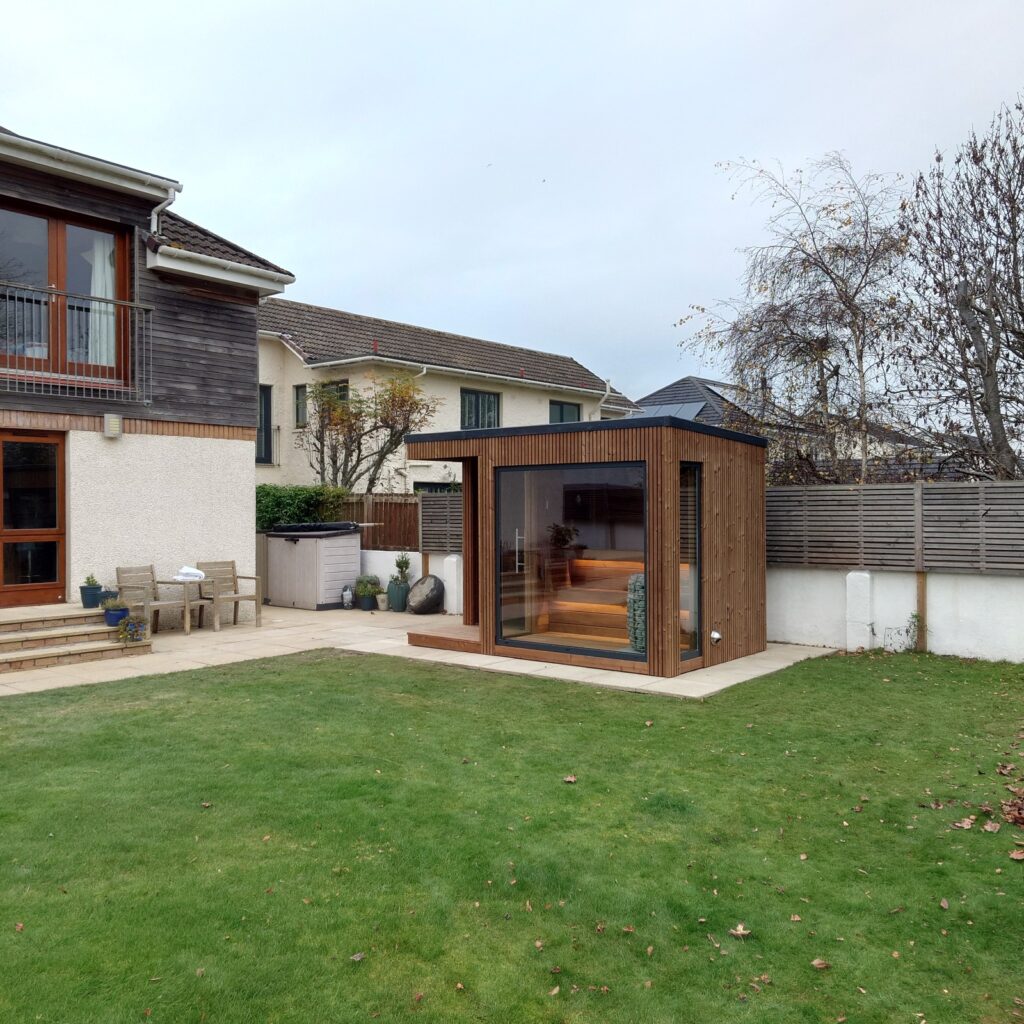
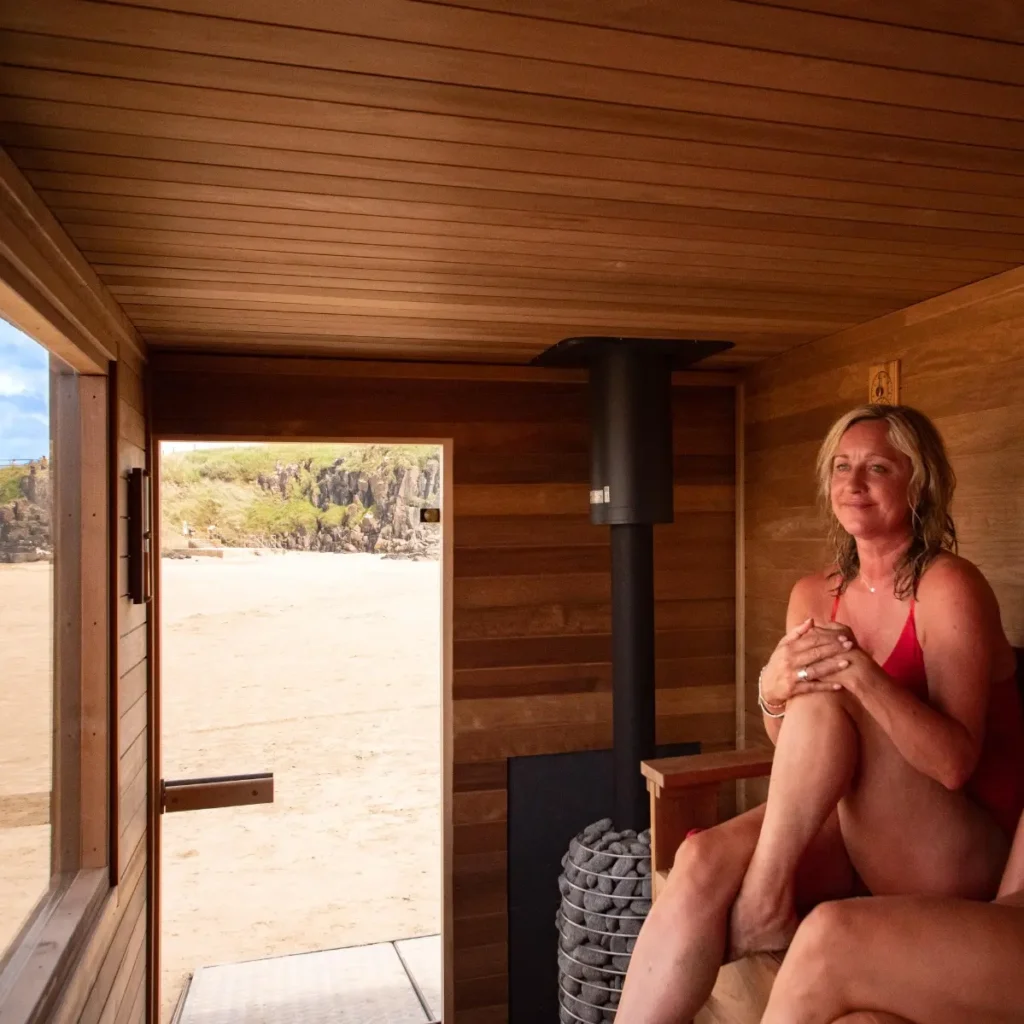
Where you put your outdoor sauna shapes how often you use it, how much it costs to install and how good it feels to sit in. A well-chosen spot makes the walk out on a cold evening part of the ritual. A poor one means a muddy path, a long cable run and a view of the neighbour’s fence. If you are wondering where to put an outdoor sauna, this guide walks through the practical questions to answer before you decide on the best location for it in your garden.
Firm, level ground
Every outdoor sauna needs a solid, level base that will not shift or hold water. Common options are a concrete slab, a paved base or ground screws, and the right choice depends on your soil, the slope of the garden and the size of the sauna. Avoid low spots where rainwater collects, and make sure water can drain away from the base rather than pooling against it.
A short, easy walk from the house
The closer the sauna is to the back door, the more you will use it, especially in winter. Think about the route you will walk in a towel on a dark, wet evening. A firm path, some low-level lighting and a sensible distance from the house all make a real difference to day-to-day use.
Access to power
An electric heater needs a dedicated supply run from your house by a qualified electrician. The further the sauna sits from your consumer unit, the longer and more expensive that cable run becomes. It is worth discussing the route early, as it can influence where the sauna ends up. If you are still deciding on the heater, our guide to wood-fired vs electric sauna heaters sets out the differences.
Privacy and the view
Decide what you want to look at from the bench. A glass front facing open countryside, the sea or a favourite corner of the garden turns a sauna into something special. At the same time, consider who can see in. Positioning, planting or a simple screen can give you privacy without blocking the view.
Shelter from the weather
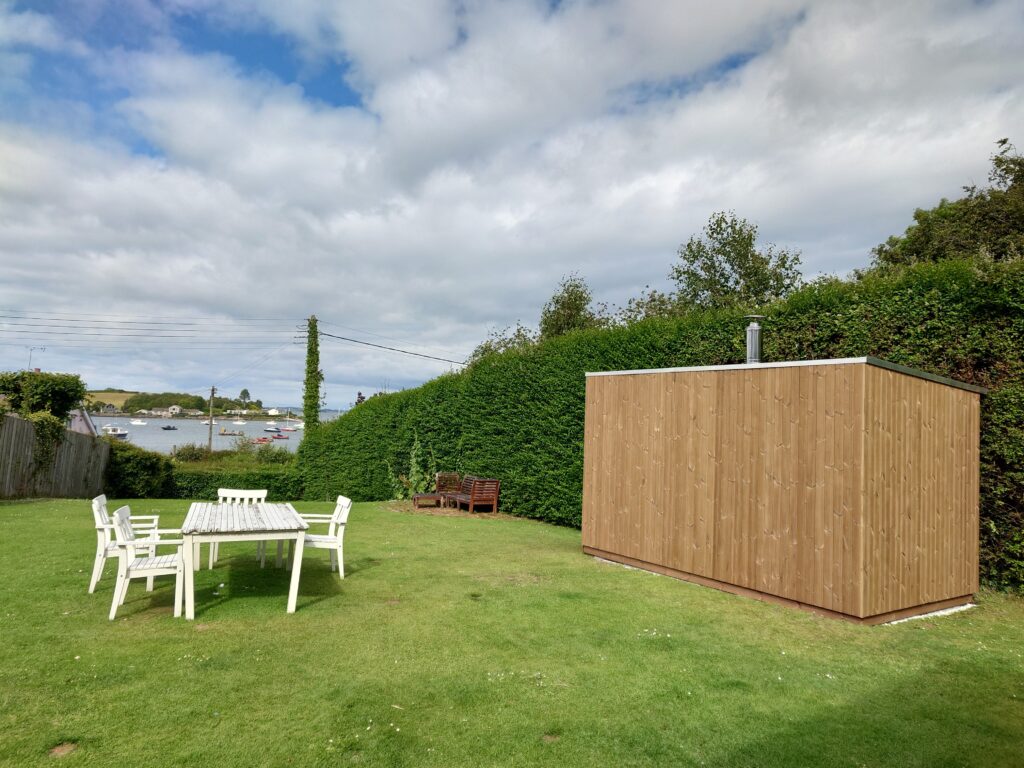
In the UK, and particularly in Scotland, wind is often more of a factor than rain. Where you can, face the door away from the prevailing wind so you are not stepping out into a gale, and use walls, hedges or the house itself as shelter. A sunny spot is a bonus for afternoon sessions and helps the exterior dry out after rain.
Trees and overhanging branches
A sauna tucked among trees can look wonderful, but overhanging branches drop leaves, sap and debris onto the roof and keep the timber damp. Roots can also disturb a base over time. Leave a sensible gap from large trees and keep branches trimmed back from the roof.
Boundaries and planning rules
Most garden saunas are permitted development, but position affects the rules, and they differ slightly across the UK. In Scotland, the permitted development rules say any part of the sauna within 1 metre of a boundary generally must not exceed 2.5 metres in height. In England, the same 2.5 metre limit applies anywhere within 2 metres of a boundary. Placing a sauna forward of a house wall that faces a road, or living in a listed building or conservation area, can also change things. Our guide to planning permission for a garden sauna explains the rules in plain English.
Extra considerations for wood-fired saunas
A wood-burning stove needs a flue with safe clearances from the sauna roof, nearby trees and other buildings. Think about where the smoke will drift, both for your own comfort and your neighbours’. If you live in a smoke control area, check with your local council which stoves and fuels you can use before you commit to a location.
Somewhere to cool off
Half of the sauna experience happens outside the cabin. Leave room for a deck or patio to sit on between rounds, and if you want an outdoor shower or cold plunge, plan for its water supply and drainage at the same time as the sauna.
Access for installation
Finally, think about how the sauna and its base will get there. Narrow side passages, steps and steep slopes can affect how a sauna is delivered and built, so measure the route before you settle on the spot at the bottom of the garden.
Outdoor sauna location: common questions
How close to a fence can an outdoor sauna be?
You can place a sauna close to a boundary, but height limits apply. Under permitted development, a sauna is generally limited to 2.5 metres in height within 1 metre of a boundary in Scotland, or within 2 metres of a boundary in England. Leave enough space to reach the walls for maintenance, and keep the flue of a wood-fired stove well clear of fences and neighbouring property.
Can an outdoor sauna sit on decking?
It can, as long as the decking is designed to carry the weight of the sauna, the heater, the stones and the people using it. Many existing decks are not built for that load, so it is worth having the structure checked or building a dedicated base.
Does an outdoor sauna need a concrete base?
Not always. A concrete slab is a common and reliable choice, but paving or ground screws can work well too, depending on the ground and the size of the sauna. The key is that the base is level, firm and well drained.
How far from the house is too far?
There is no fixed rule, but every extra metre adds to the cost of running power and to the walk on a winter night. Most people find the sweet spot is close enough to reach comfortably in a towel and far enough to feel like an escape.
Putting it all together
The perfect location balances all of these, and the right answer is different for every garden. Our complete UK guide to garden saunas covers sizing, styles and design alongside siting, and our sauna cost guide explains how groundwork and electrics feed into the overall budget.
Let us help you find the right spot
Skotlanti designs and builds bespoke outdoor saunas made to suit your garden, your view and the way you like to relax. Get in touch with Skotlanti and we will help you choose the best location for your sauna from the very first conversation.