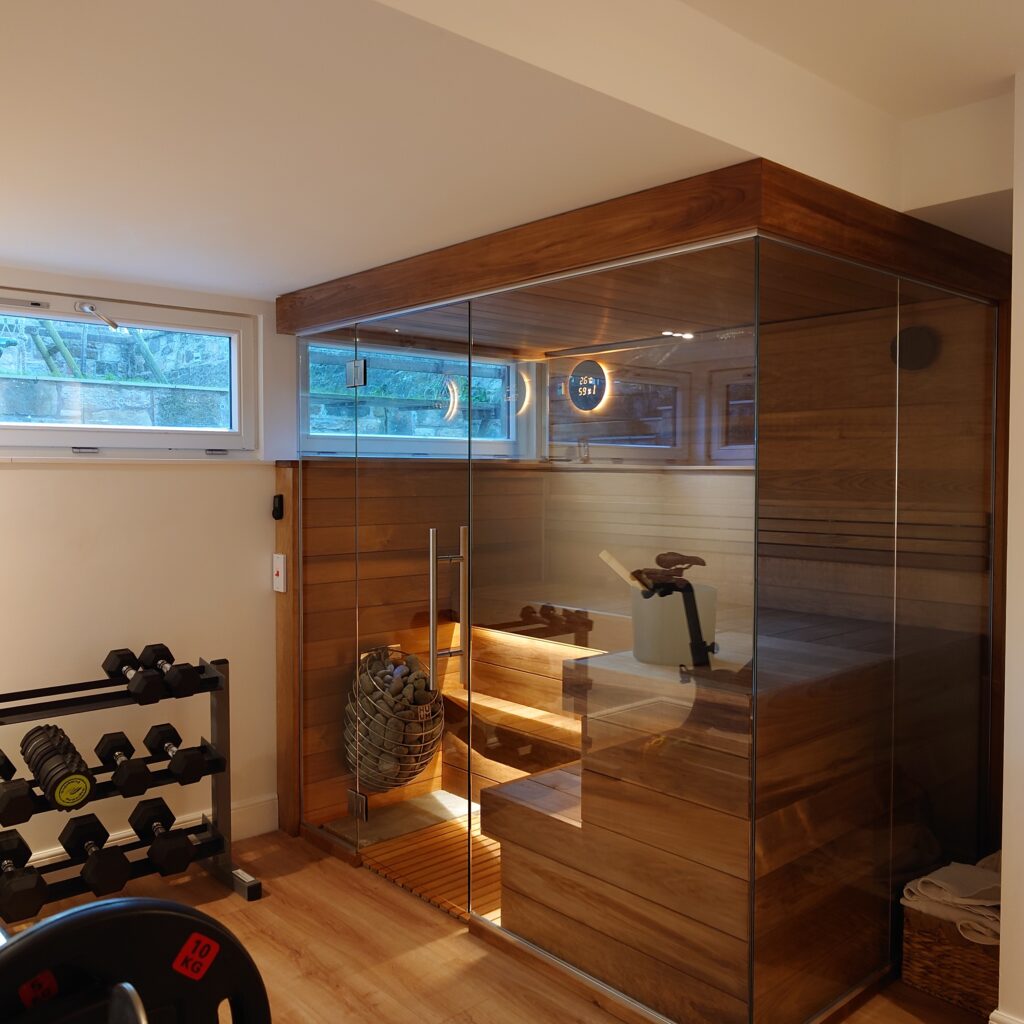
Saunas have been part of daily life in Scandinavia and Finland for thousands of years, and modern research is now catching up with what regular users have long felt: sitting in the heat does more than help you relax. This guide sets out the sauna benefits that are actually supported by evidence, where the science is strong and where it is still emerging, and how to enjoy those benefits safely.
At Skotlanti Saunas we build bespoke saunas for homes and gardens across the UK, so we care about giving you an honest, balanced picture rather than a list of overblown claims.
How a sauna affects your body
A traditional sauna warms the air around you to roughly 70 to 90°C, while an infrared sauna uses radiant heat at a lower air temperature. Either way, your skin warms, your heart rate rises, and your blood vessels widen to move heat to the surface of your body. In many respects this response looks similar to light or moderate exercise: your pulse can climb to 100 to 150 beats per minute during a session and settle again afterwards.
That cardiovascular “workout” without the physical strain is the mechanism behind many of the benefits below. It is also why sensible time limits matter, which we cover later.
The evidence-based benefits of sauna use
Cardiovascular health
The strongest evidence for sauna benefits comes from long-running Finnish research tracking thousands of regular users over decades. These studies have linked frequent sauna bathing with lower rates of high blood pressure and cardiovascular events, with the largest associations seen in people using a sauna four or more times a week. This is observational research, so it shows a strong association rather than absolute proof of cause, but the pattern is consistent and biologically plausible given the effect of heat on blood vessels.
Recovery and muscle relaxation
Warmth increases blood flow to tired muscles, which is why so many people use a sauna after training or a long day on their feet. Improved circulation can help ease muscle tension and stiffness, and many athletes build heat sessions into their recovery routine.
Stress relief and relaxation
The quiet, warm environment of a sauna encourages the body to shift out of a stressed state. Regular users often report better mood and a feeling of calm after a session, and the ritual of stepping away from screens and demands is a genuine part of the benefit.
Better sleep
A rise and then gradual fall in body temperature is one of the natural cues that helps you drift off. A sauna in the evening, finished an hour or two before bed, can support that wind-down for many people.
Skin cleansing
Sweating opens the door to a deep cleanse, rinsing away surface dirt and leaving skin feeling refreshed. The effect is short term rather than a cure for skin conditions, but it is a pleasant and real part of a regular sauna habit.
A sense of wellbeing and routine
Beyond any single measurable outcome, the biggest reason people keep coming back is how a sauna makes them feel. Building a regular, screen-free ritual into the week has value that is hard to capture in a study but easy to notice in daily life.
What the science does not yet prove
It is worth being clear about the claims that outrun the evidence. Saunas do not “sweat out toxins” in any meaningful medical sense; your liver and kidneys handle that. Sweating during a session is about temperature control, not detox. Sauna use is also not a weight-loss method: any drop on the scales immediately afterwards is water lost through sweat and returns as soon as you rehydrate. Treat a sauna as a support for wellbeing and recovery, not a substitute for exercise, a balanced diet, or medical care.
Using a sauna safely
The benefits above assume sensible use. A few simple habits keep sessions safe and enjoyable:
- Start with shorter sessions of 10 to 15 minutes and build up as you get used to the heat.
- Drink water before and after to replace fluid lost through sweating.
- Avoid alcohol before or during a session.
- Step out if you feel dizzy, lightheaded, or unwell, and cool down gradually.
- Leave time between the sauna and bedtime so your body can cool down.
Some people should take extra care or check with a doctor first, including anyone who is pregnant, has heart conditions or low blood pressure, or is taking medication that affects hydration or blood pressure. If in doubt, ask your GP before starting a regular sauna routine.
Getting the most from a sauna at home
Consistency is what turns these benefits from occasional to lasting, and that is far easier when a sauna is a few steps from your back door rather than a trip across town. A well-designed home sauna lets you build the habit around your own schedule. If you are weighing up traditional versus radiant heat, our guide to what an infrared sauna is explains how the two feel different in practice, and if you are simply wondering whether the heat helps when you are run down, see our piece on whether saunas are good for colds.
The bottom line
The clearest, best-supported sauna benefits are cardiovascular support, muscle recovery, stress relief, and better sleep, with skin and wellbeing benefits that regular users value highly. Used sensibly and regularly, a sauna is a genuinely worthwhile addition to a healthy lifestyle. If you would like to make it part of your home, explore our bespoke sauna range or get in touch for tailored advice.