If you are planning a sauna for your home, one of the first decisions you will face is the type of heat: infrared or traditional. Both deliver a genuine, rewarding sauna experience, but they feel different, cost different amounts to run, and suit different people. This guide compares infrared versus traditional saunas across the things that actually matter so you can choose with confidence.
The key difference in how they heat
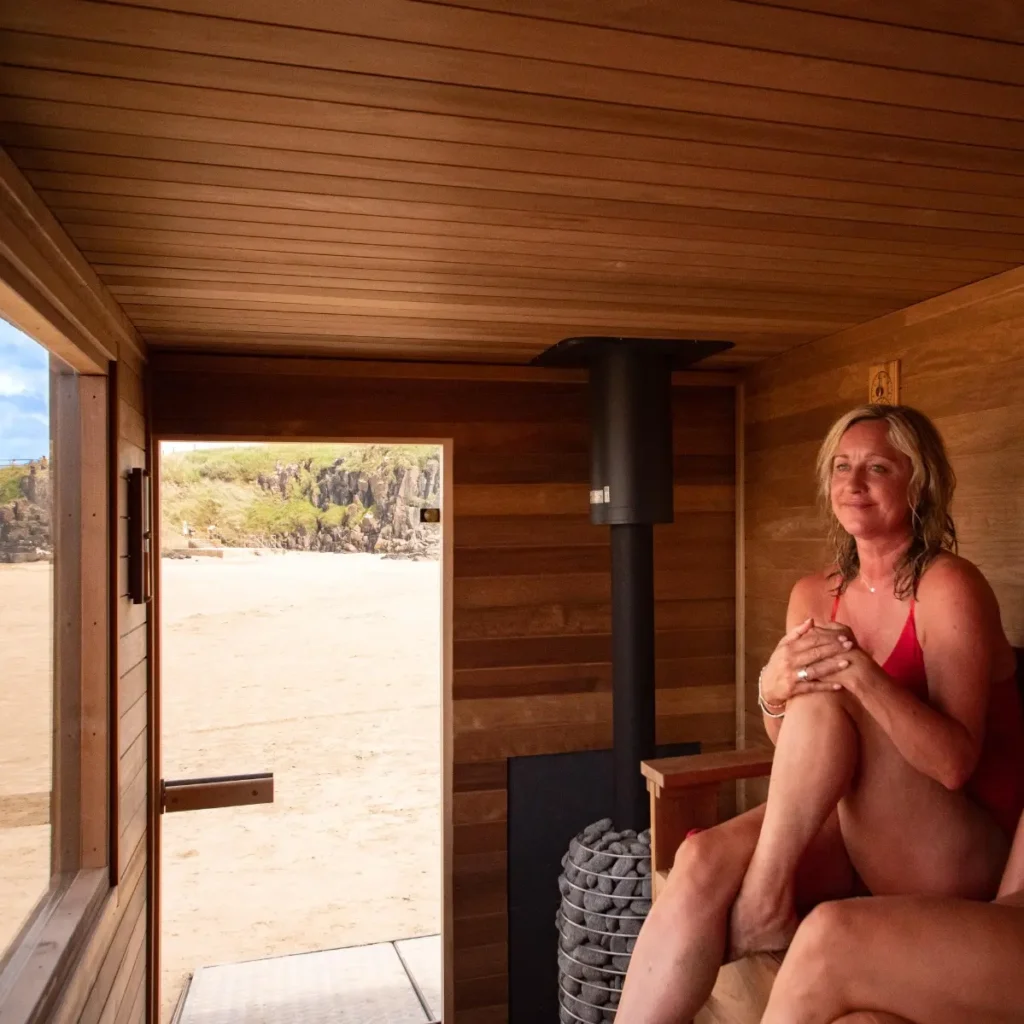
A traditional sauna heats the air. A heater warms a bank of stones, the stones warm the air in the cabin, and that hot air warms you, typically at 70 to 90°C. You can pour water over the stones to create a burst of steam and raise the humidity, the classic Finnish loyly.
An infrared sauna heats you directly. Infrared emitters produce radiant heat that warms your body rather than the air around it, so the cabin feels cooler, usually 45 to 60°C, while you still work up a deep sweat. Our guide to what an infrared sauna is explains the technology in more detail.
Infrared vs traditional sauna at a glance
Heat and feel
Traditional saunas give an intense, enveloping heat with the option of steam, which many people find is the “real” sauna experience. Infrared offers a milder, gentler warmth that some find easier to tolerate for longer, with no strong blast of hot air when you open the door.
Warm-up time
Infrared cabins are ready in around 10 to 15 minutes. A traditional sauna usually needs 30 to 45 minutes to bring the stones and air up to temperature, so a little more planning is involved.
Running costs and energy
Because infrared runs at a lower temperature and heats up quickly, it typically uses less energy per session, which appeals if you plan to use your sauna daily. A traditional electric heater draws more power, though wood-fired options give a different kind of value and atmosphere.
Humidity
Traditional saunas let you control humidity by adding water to the stones, moving from a dry heat to a steamy one. Infrared saunas are a dry heat only, with no steam.
Space and installation
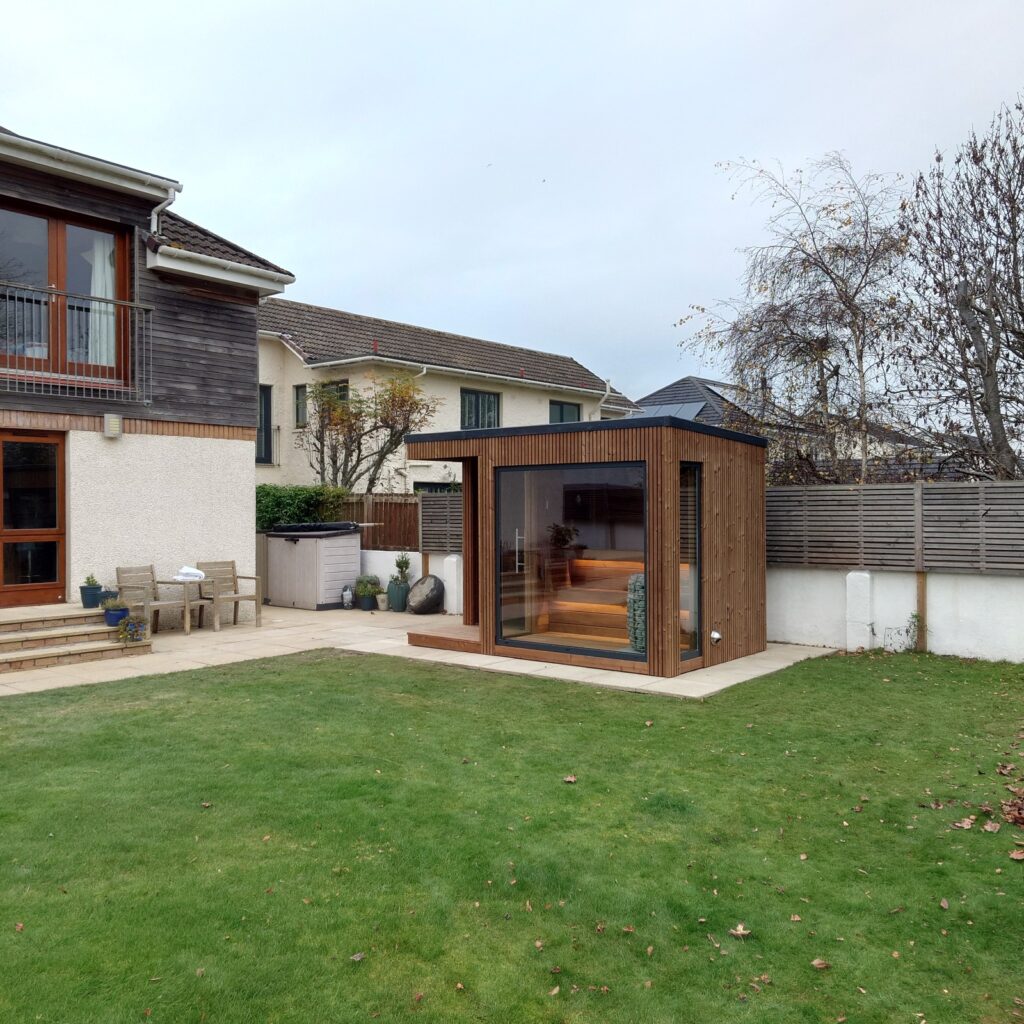
Infrared cabins are often more compact and simpler to site, which can make them a good fit for a spare room, garage, or smaller footprint. Traditional saunas need appropriate ventilation and heater clearances, which a bespoke builder will design in from the start.
Which should you choose?
There is no single right answer, but a few pointers help:
- Choose traditional if you love intense heat and steam, enjoy the ritual of loyly, and want the classic sauna experience.
- Choose infrared if you prefer a gentler heat, want quick warm-up times, plan to use it most days, or are fitting a sauna into a tighter space.
Some people genuinely enjoy both, and a bespoke build can even combine elements. The most important thing is being honest about how you will actually use it: the best sauna is the one you look forward to and use regularly.
Health benefits: are they different?
Both types raise your core temperature, get your heart rate up, and make you sweat, so the wellbeing and recovery benefits are broadly similar. The difference is mainly in the experience rather than the outcome. For a full, evidence-based look at what you gain, see our guide to sauna benefits.
Making the decision for your home
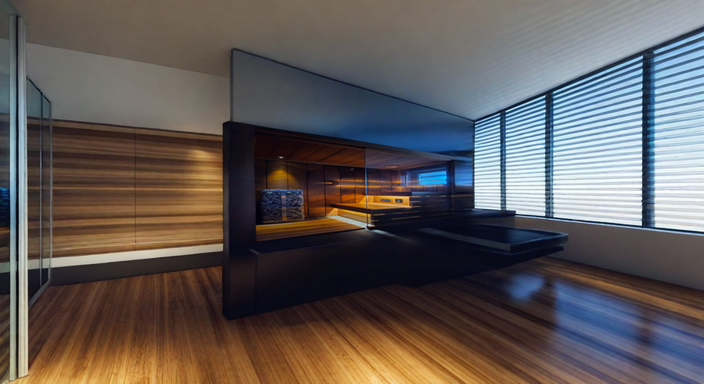
When you are planning an indoor sauna, the type of heat sits alongside questions of size, location, and finish. Our complete guide to home saunas in the UK walks through all of those decisions together, so you can see how the infrared versus traditional choice fits into the bigger picture.
Talk to a bespoke sauna builder
The right choice depends on your space, your budget, and how you like to relax. Skotlanti designs and builds both traditional and infrared saunas, tailored to your home. Explore our range or get in touch and we will help you weigh up the options for your project.